
About This Guide
Training pads look deceptively simple, but a lot rides on the materials inside, the way they are produced, and the quality checks behind them. In this guide we walk through what these pads really are, why demand keeps climbing, the main categories, how the layers work, and how to pick a manufacturing partner you can count on.
1.Defining the Product and Its Users
Disposable pet training pads — often called puppy pads, pee pads, or dog training pads — are absorbent sheets that collect pet urine and help keep indoor spaces clean and dry.
They are typically used for: house-training puppies; senior dogs with limited mobility; apartment pets with little outdoor access; daycare and boarding facilities; veterinary clinics; and travel and transport.
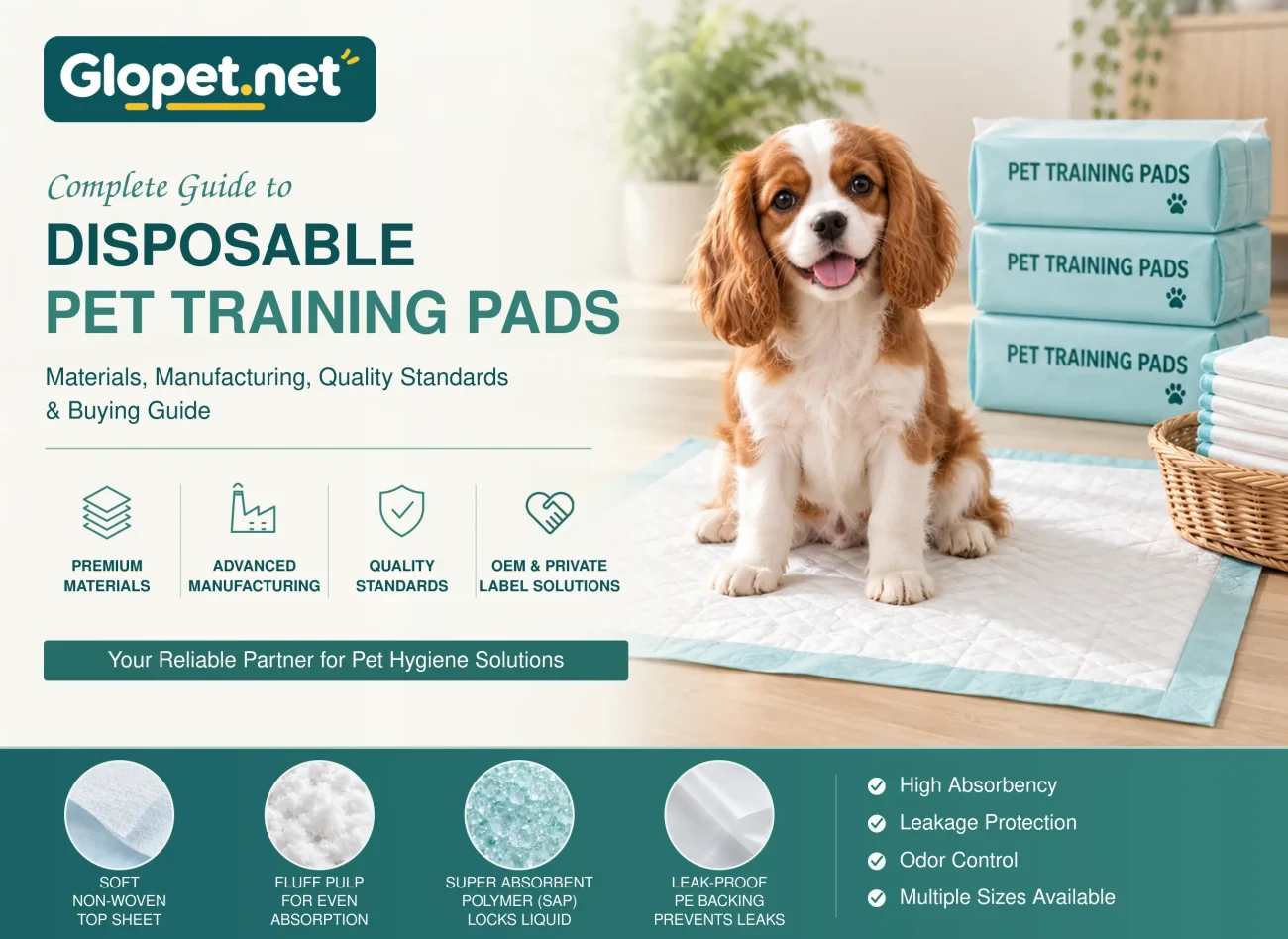
A standard pad is built from several layers: a soft non-woven topsheet that lets liquid pass quickly, an absorbent core made of fluff pulp plus SAP to lock in moisture, a waterproof PE film on the bottom to stop leaks, and adhesive edges that hold the structure together. Though pads look simple, real performance rests on material choice, production technology, and quality control.
2.What Is Driving Demand
The pet industry has changed noticeably in recent years. More households treat pets as family, so demand for convenient, hygienic care products keeps climbing. Four forces stand out.
City Living and Indoor Pets
Many owners live in apartments with limited outdoor access. Pads offer a practical daily hygiene solution.
The Push for Convenience
Modern owners want products that save time and stay clean. Disposable pads skip the washing and drying of reusable options.
Growth of Professional Pet Services
Pet hotels, grooming salons, veterinary clinics, and training centers all need reliable hygiene products in bulk.
Private-Label Expansion
More retailers and pet companies are launching their own branded products, creating fresh demand for OEM and customized production.
3. The Main Pad Categories
Standard Puppy Pads
The everyday choice for training. Typical features: multiple absorbent layers, standard SAP content, cost-effective design, and household use.
Heavy-Duty Pads
Built for larger dogs or situations needing more capacity. Features may include higher SAP concentration, a thicker absorbent core, and better leak protection.
Activated Carbon Pads
Activated carbon layers help cut odors. Commonly used for indoor spaces, multi-pet homes, and premium lines.
Eco-Friendly Pads
Designed for sustainability-minded consumers. Possible materials include bamboo fiber, recycled packaging, and biodegradable components.
4. How the Layers Add Up
Non-Woven Topsheet
The topsheet is the first layer to meet liquid. A good one offers fast absorption, a soft surface feel, good penetration, and comfortable contact. Common materials are PP non-woven fabric and hydrophilic treated non-woven fabric.
Super Absorbent Polymer (SAP)
SAP is one of the most important parts of a modern pad. It absorbs large volumes, turns liquid to gel, and lowers leak risk. More SAP usually means more capacity, but also higher cost, so manufacturers balance capacity, price, and market position.
Fluff Pulp
Fluff pulp spreads liquid across the core, improves spreading, speeds up absorption, and adds structure.
Waterproof PE Film
The bottom layer keeps urine off the floor. A quality film should offer strong waterproofing, good flexibility, and low noise.
5. The Road From Raw Material to Retail Pad
Knowing how pads are made helps buyers judge a supplier’s capability. A professional process usually covers these steps.
Step 1: Material Preparation
Inputs are checked: non-woven fabric, SAP, fluff pulp, PE film, and packaging materials.
Step 2: Core Formation
The machine blends pulp and SAP into an even absorbent layer. This stage affects absorption speed, retention, and consistency.
Step 3: Layer Assembly
The layers are joined — topsheet, absorbent core, waterproof backing. Advanced lines keep alignment accurate and quality stable.
Step 4: Cutting and Sealing
Rolls are cut into individual pads. Edge sealing helps keep the shape, cut leaks, and improve appearance.
Step 5: Packaging
Finished pads are packed as required: retail packaging, bulk packaging, private-label packaging, or printed bags.
6. Performance Criteria That Matter
Absorption Capacity
A pad should soak up urine quickly and avoid pooling. Key factors are SAP quantity, core structure, and material distribution.
Leakage Protection
Leaks hurt both experience and brand. Manufacturers strengthen leak defense through a waterproof backing, sealed edges, and optimized core design.
Absorption Speed
Fast uptake keeps the surface dry. This matters most for puppy training, multi-use settings, and premium products.
Odor Control
Controlling smell is increasingly important indoors. Common solutions are activated carbon layers, odor-control materials, and better absorbent technology.
7. A Guide to Sizes, Weights, and Capacity
Different markets need different specifications. Common sizes run from small (puppies and small pets), to medium (daily household use), large (larger dogs and extended use), and extra large (professional facilities).
Thickness options: economy (lower material use, competitive pricing), standard (balanced performance and cost), and premium (higher absorption and stronger protection). The right spec depends on pet size, usage frequency, retail position, and customer expectations.
8. The Standards Behind a Reliable Pad
Reliable manufacturers run strict quality control. Common tests include absorption testing (total capacity, speed, retention), leakage testing (waterproof performance under pressure), material inspection (thickness, weight, consistency, safety), and packaging inspection (correct labeling, accurate quantity, packaging durability).
9. Customization and Private Labeling
Many pet brands use OEM manufacturing to develop customized products. A professional OEM supplier can support product customization — size, thickness, SAP level, packaging design, and printed bags — as well as private-label production, which lets retailers launch their own brand without running a factory. The advantages are lower investment, faster entry, and flexible development.
10. Screening Manufacturers Properly
Picking the right supplier is one of the biggest decisions a buyer makes. Consider manufacturing experience (industry track record, stable capacity, professional teams), production capacity (consistent supply, large orders, seasonal swings), quality control (raw-material checks, in-line monitoring, finished-product testing), and OEM capability (custom packaging, development support, flexible ordering).
11. Mistakes That Cost Buyers
Choosing Only on Price
Low-cost products may use less SAP, lower-quality materials, or weak packaging, which often leads to complaints.
Ignoring Production Capability
A supplier may excel at samples yet fail on large orders. Always verify factory capability.
Ignoring the Target Market
Different markets need different products. A premium pet store and a discount retailer usually need different positioning.
12. Trends Shaping the Market
The pet hygiene market keeps evolving. Three trends stand out: more sustainable materials (eco-friendly fibers, reduced plastic packaging, sustainable methods); premium pet care (better odor control, higher absorption, improved comfort); and customized private labels (more companies building unique brands through OEM).
13. Final Advice on Partnering
Disposable pet training pads sit at the meeting point of material technology, manufacturing skill, and quality management. For buyers, the right choice goes beyond price to include manufacturing capability, material quality, quality control, OEM support, and long-term reliability.
At Glopet, we focus on reliable disposable pet hygiene solutions built on manufacturing experience, customization capability, and quality-focused production. Whether you need standard pads, OEM products, or private-label solutions, choosing the right partner is the first step toward a successful pet care line.